Shifting Dealer Shifts and Card Burn Protocols in Private Baccarat Salons Across Southeast Asian Resorts
Written by Noah Hartmann · Oct 25, 2026
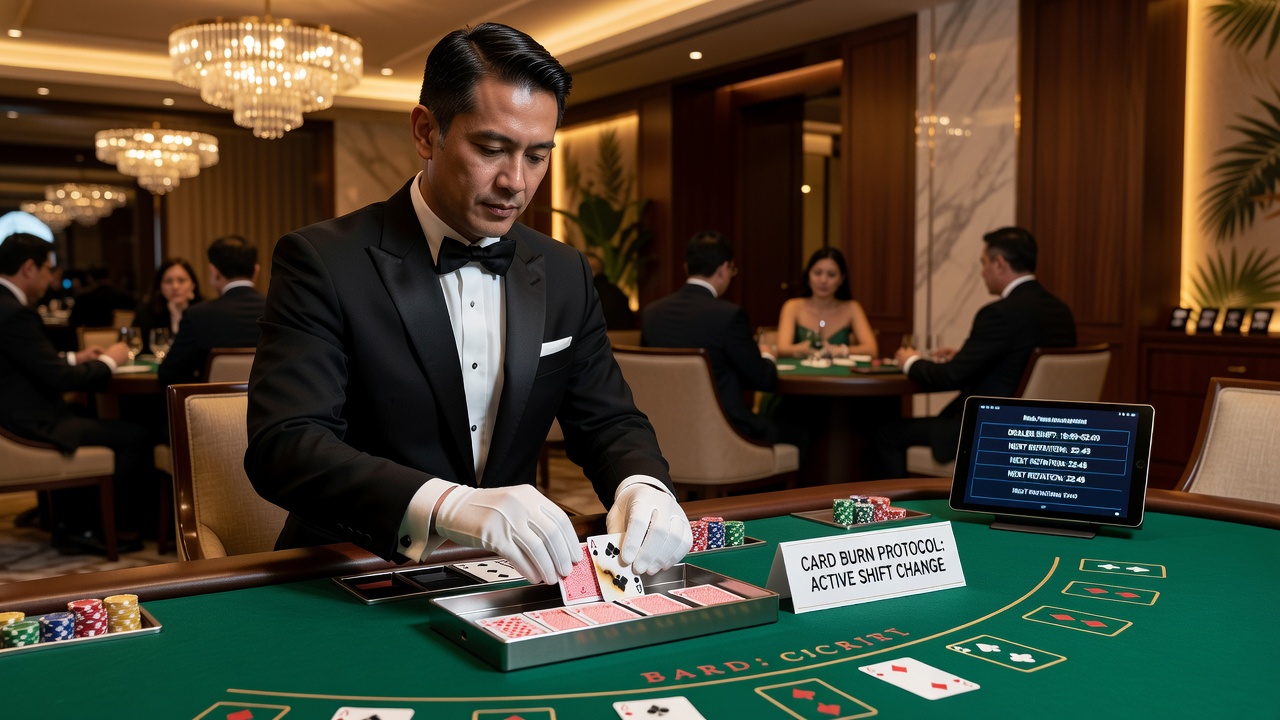
Shifting Dealer Shifts and Card Burn Protocols in Private Baccarat Salons Across Southeast Asian Resorts
Private baccarat salons in Southeast Asian resorts maintain structured dealer rotation schedules that align with operational security standards, and these patterns appear across major properties in Macau, Singapore, and the Philippines. Research from regional gaming authorities shows dealer shifts typically last between twenty and thirty minutes before a replacement takes over, a practice that reduces fatigue while preserving continuity during extended shoes. Observers note that resorts coordinate these rotations through central control rooms where supervisors monitor timing and performance metrics without interrupting play.
Dealer Rotation Practices in High-Limit Rooms
Facilities such as those operated by Sands China and Resorts World Sentosa implement staggered shift changes so that two dealers remain at the table during transitions, and this overlap allows the incoming dealer to verify the current shoe status before assuming full responsibility. Data from PAGCOR reports indicate that such procedures cut down on potential discrepancies in card handling, and the approach has become standard in private salons where table limits exceed fifty thousand dollars per hand. Those who study these operations find that rotation logs feed into broader surveillance systems that track every dealer movement from the moment a shift begins until it ends.
Resorts adjust rotation frequency based on player volume and shoe progression rather than fixed clocks alone, and this flexibility lets management respond to busy periods without compromising protocol. A single dealer might handle multiple consecutive shoes during low-traffic hours, whereas peak seasons trigger more frequent handoffs to maintain alertness. External audits conducted by independent firms confirm that these variable schedules still adhere to minimum rest requirements set by local labor and gaming regulations.
Card Burn Procedures and Their Variations
Card burn protocols start each new shoe with a predetermined number of cards removed from the top after the initial cut, and the exact count often depends on the first exposed card value in eight-deck configurations common throughout the region. In many private salons the burn sequence removes between one and three cards initially, followed by additional burns at the end of each hand if house rules require it, creating a layered randomization process. Industry reports from the Philippine Amusement and Gaming Corporation document how these steps integrate with automated shuffling machines to ensure no predictable patterns emerge across multiple shoes.
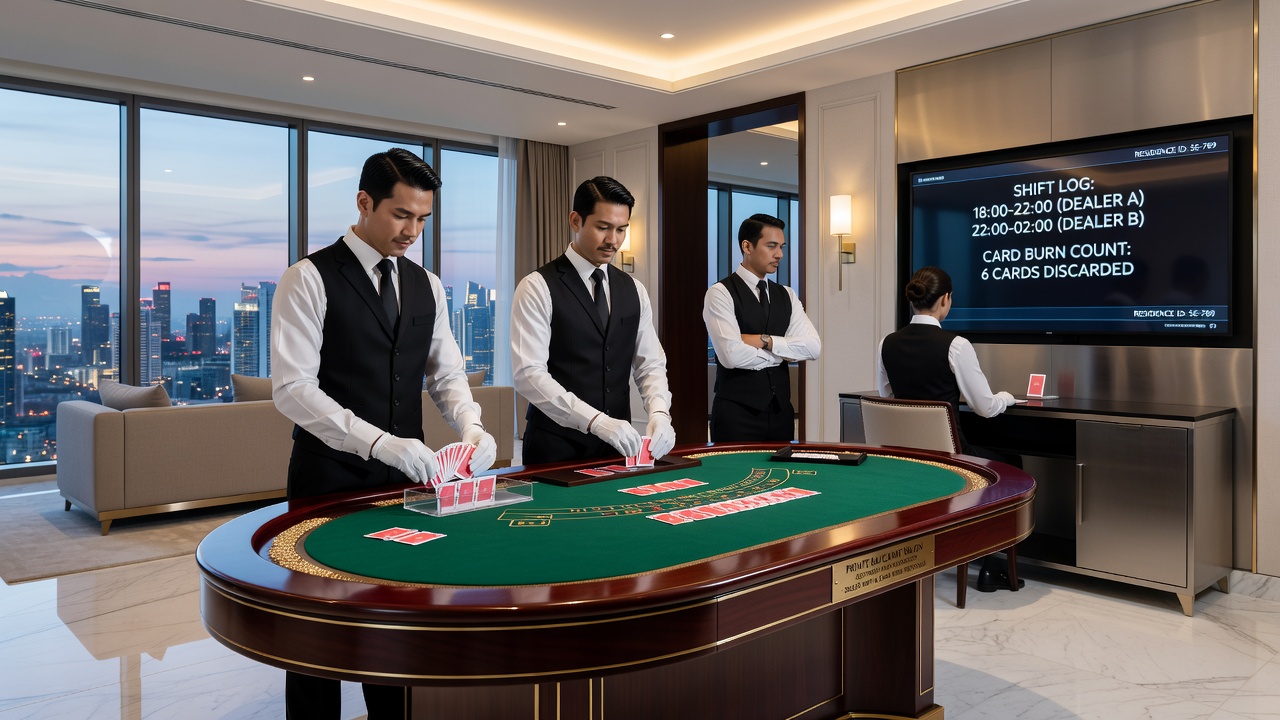
Private rooms sometimes apply extended burn sequences when high-stakes players request additional security measures, and the extra cards are discarded face down into a separate discard tray before play resumes. This customization stays within regulatory bounds yet allows venues to accommodate client preferences without altering core payout structures. Figures from the Casino Regulatory Authority of Singapore reveal that documented burn variations remain consistent across audited sessions, with deviations flagged automatically through electronic table systems.
October 2026 marks the scheduled rollout of updated digital tracking software at several Macau resorts that will log every burned card in real time, and this system connects directly to central databases for post-session review. The technology builds on existing RFID-enabled cards already in use, adding another verification layer that cross-checks physical discards against electronic records. Analysts tracking these developments expect similar upgrades to appear in Singapore properties within the following quarter as suppliers standardize the interfaces.
Integration with Surveillance and Compliance Systems
Surveillance teams coordinate with dealer rotations by adjusting camera angles during each changeover, and this synchronization prevents blind spots that could arise when one dealer exits and another enters the frame. Compliance officers review burn logs alongside video footage to confirm that protocols match recorded actions, and any mismatch triggers immediate investigation under local gaming statutes. Studies published by the Asia Pacific Association of Gaming Regulators highlight how these combined controls contribute to lower incident rates in private salons compared with main gaming floors.
Resort operators maintain detailed procedure manuals that specify exact burn counts for different baccarat variants, and staff undergo regular certification to ensure uniform application regardless of which dealer handles a given shift. These manuals also address edge cases such as shoe changes mid-session or equipment malfunctions that require partial reburns, and each scenario includes step-by-step responses that preserve game integrity. External consultants periodically test staff adherence through unannounced audits that simulate real-play conditions.
Regional Regulatory Influences on Protocol Standardization
Regulatory bodies across Southeast Asia continue to refine guidelines around dealer shifts and card burns, with Macau's Gaming Inspection and Coordination Bureau issuing clarifications in early 2026 that emphasize digital logging requirements. Similar updates from authorities in Cambodia and Vietnam focus on training minimums for personnel working in private salons, ensuring that rotation and burn procedures receive equal attention during licensing reviews. These evolving standards reflect broader efforts to align practices while respecting each jurisdiction's unique operational environment.
Training programs incorporate scenario-based modules that walk dealers through shift transitions and burn sequences under time pressure, and completion records feed into personnel files used for performance evaluations. Resorts that invest in these programs report smoother table operations during extended private sessions where multiple shoes run consecutively. Cross-border industry forums scheduled for late 2026 aim to share best practices on these specific protocols without mandating uniformity.
Conclusion
Dealer shift rotations and card burn protocols function as interconnected elements within the operational framework of private baccarat salons throughout Southeast Asian resorts. Consistent application of these procedures supports both security objectives and regulatory compliance, while ongoing technology integrations scheduled through October 2026 and beyond promise further refinements in documentation and oversight. Regional authorities and resort operators continue to document outcomes from these systems to inform future adjustments.